KNOW A LITTLE BIT MORE ABOUT YOUR DELICIOUS CATFISH
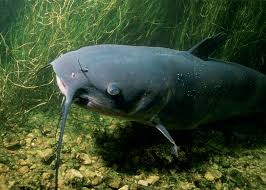
 ANamed for their prominent "barbels", which give the image of cat-like whiskers, they are found in primarily freshwater environments of all kinds, with species on every continent except Antarctica.
Some species from the families Ariidae and Plotosidae are also found in marine environments. They feature some of the smallest known vertebrates, including the candiru, the only vertebrate parasite to attack humans, as well as Pangasius gigas, the largest reported freshwater fish.
Catfish have no scales. All catfish, except members of Malapteruridae (electric catfish), possess a strong, hollow, bonified leading ray on their dorsal and pectoral fins, through which a stinging protein can be delivered if the fish is irritated. Equipped with special respiratory organs, some species can survive without water temporarily as a result of drought, for example, and will travel for short distances over land in search of another suitable habitat.
Some species will gulp air and use the intestine as a storage vehicle for oxygen, which is absorbed into the bloodstream via thin-walled capillaries lining the intestinal wall. Others, such as Pangasius sutchi, use the swim bladder as an accessory organ for storing air. And still others, are equipped with elaborate air chamber systems that support oxygen transfer along with the lungs.
In the United States, June 25 is National Catfish Day.
posted by bridget at 11:16 AM
0 comments