Saturday, April 23, 2011

HAPPY EASTER

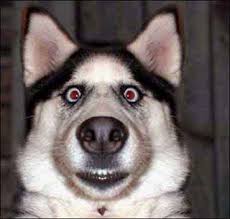
Easter is all about honoring the past, but the celebration is getting a 21st Century spin .this year thanks to my cutie.

Labels:

Wednesday, December 08, 2010

CHRISTMAS GIFTS FOR DOGS...

Are you planning on buying a Christmas gift for your dog? Here are some wonderful gift ideas that can help you decide what to buy.

Christmas is coming, and it is time to start buying gifts for your loved ones. For some individuals, the family dog is one of those loved ones that should have a present under the tree. You may be planning on buying a gift for your dog, or another dog that has made an impact on your life. These wonderful gift ideas can help you decide what to get for your special canine friend.
Treats

Every dog likes to eat treats. They make good rewards if your dog does a trick, or if he is just being good. If you choose treats as a gift, you may not want to put them under your tree until Christmas. If you do, your dog may smell the treats, and make a mess of all your presents. Some wonderful treat ideas are:
    * Dog muffins
    * Dog cookies
    * Jerky treats
    * Bacon strips
    * Dog biscuits
    * Dental treats
    * Chewy treats
    * Pepperoni strips
    * Chicken strips
    * Kong treats

Lasting Treats

    * Rawhide sticks and bones
    * Ham bones
    * Pig ears
    * Rib bones
    * Stuffed bones

Dog Accessories

Your dog may need some new accessories. If some of your dogs belongings are worn or chewed, you may want to think about replacing them. Some great accessory ideas are:

    * Collar
    * Leash
    * Tags
    * Clothes
    * Hat
    * Scarf
    * Bandana
    * Boots

Toys

Toys keep your dog occupied and help him get exercise. There are many different varieties of dog toys on the market today, so finding the right one shouldn't be an issue. Some good dog toy ideas are:
    * Kong
    * Tennis balls
    * Balls that are hard to chew
    * Ball launcher
    * Rope bone
    * Flying disc
    * Squeaky toy
    * Tug and toss toy
    * Stuffed animal
    * Rubber bone
    * Laser light
    * Christmas themed toy

Bedtime Gifts

If you set up a sleeping area for your dog it might prevent him from snuggling up to you. Some items for you to consider for your dogs sleep area are:

    * Bed
    * Blanket
    * Pillow

Grooming Supplies

No one likes a smelly dog, and when his nails are long, it can be painful to you and your company. Some gifts you can but to help your dog look and smell better are:

    * Shampoo
    * Nail Clippers
    * Brush
    * Towel
    * Drying mitts
    * Hair clipping kit
    * Bathing brush
    * Flea comb
    * Tooth brush
    * Toothpaste

Choosing the right gift for your canine friend isn't very hard. When it comes to treats and toys, most dogs aren't very picky. If you need to replace items your dog already has, this is a good time to do it. Most of these items can be purchased at your local department and pet store. Your special canine friend will enjoy the gift you have chosen.


Labels: ,

Thursday, July 29, 2010

BEDTIME FEARS...

For kids, feeling scared or worried at bedtime is one of the main reasons for having trouble falling asleep. A kid might be afraid of the dark or might not like being alone. If a kid has a good imagination, he or she might hear noises at night and fear the worst — when it's just the family cat walking down the hall.
As you get older, these fears usually fade. Until they do, make sure your room makes you feel relaxed and peaceful. Look around your room from your bed. Are there things you can see from bed that make you feel good? If not, add some. Display some family photos or other pictures that make you happy. You might even create a mobile to hang over your bed.


Labels: ,

Tuesday, July 27, 2010

A TRUE DOG STORY...

I would like to let it be known quite a few facts about my wonderful canines. I own 7 of them, and though it may seem like too many, for me it is not. I own a wonderful Feist (Rat Terrier or Teddy Roosevelt Terrier), all of which is 12 inches high, 15 pounds. She was christened Coca Cola for the color of her coat. Her back is dark brown, almost black, while her head and the tops of her legs is a 'fizzy' color. Her neck is splashed with white as are her belly and legs. Her long tail has a white tip. She is already 6 years old and is starting to get a few gray hairs.
Being a terrier, she loves to hunt animals including cats and chickens-much to the dismay of my grandparents. C.C., as we call her, is agile and quick, making her an excellent ratter. She also is a great squirrel dog. Every now and then, she tries to run up the tree and actually gets halfway up. She has also been seen catching rabbits and moles which plagued our garden until she arrived. She even chases the small herd of deer that live on our farm.
Now for the other adult dog. Jodee is an Australian Shepherd/Border Collie/Red Heeler mix. She may sound like a Heinz 57 but she is actually very pretty and unusual. Her coat is red merle. It is like a very red brown with black specks and spots. Even her eyes have a red tint to them, not like C.C.'s dark brown ones. She is 22 inches tall and around 45-50 pounds. She is a mere 3 years old compared to the veteran, C.C. Compared to C.C., the outgoing, sometimes aggressive Feist, Jodee is quiet, shy, and conservative. When I first acquired her, she was about 8 or 9 months old. She was extremely frightened but I pulled her out of some of her shyness.
When she was younger, she had a lot of her herding instinct. Quite often I would catch her chasing the horses, trying her best to make them go where she wanted them. I did not have any smaller animals that she could be trained to control easier so she has not been trained to herd. C.C. decided that she would interfere with Jodee's herding abilities and my efforts by teaching her all about being a hunting dog. She taught her how to chase chickens, how to tree squirrels, how to chase deer, and how to dig up armadillos. Now, Jodee thinks that she is an overgrown Feist.
Though she still occasionally chases the horses, it is only because her instincts still have a strong spark in them. I did have another Feist, a male named Snoopy. He was C.C.'s mate and he also contributed to Jodee's training, except he helped me train her to work agility.
Jodee had 13 beautiful puppies, C.C. four. Jodee's puppies looked like hounds in their body style but they had the blue and red merle coloring of Jodee. We have given away all of them except four. C.C. had two tan puppies, a black one, and a brindle one. We gave each of them away too except for one. That is why I own 7 dogs

Labels: ,

Friday, February 05, 2010

FOOD FOR THOUGHT...

Unlike cats, dogs are pack animals and they need social interactions. It is easy and fun to think about the types of food, the brand of dog bed or the colour of the leash before bringing a puppy home. However, domestic dogs have their decision-making ability taken away from them by domestication. They and their owners do not share a common communication system. Dog owners need to consider the needs of their dogs and how the needs can be met before bringing one home.


Labels:

Friday, January 01, 2010

HOW HUMAN AND DOG'S NEW YEAR'S RESOLUTIONS ARE THESAME


Basically, it is just like looking at your own New Year's resolutions when making resolutions for your dog only they depend on you to stick with it. You want to stay healthy and in order to do that you need to eat healthy and exercise more. The same goes for your dog. They need to be exercised and they need the right food, otherwise they can end up unfit and extremely unhealthy. If you really care about your dog, it is really important to take good care of him.
Sure, your dog may love nothing more than a cookie every now and again, but depending on the ingredients, it simply may not be healthy and it could potentially harm your dog.

You need to stick to a healthy eating plan for your dog as his health really does start from the inside. When you have a healthy dog, you will notice that they are happier and a lot more active. So, if you have not yet started to look at your dog's diet and exercise routine, now would be the perfect time at the start of a brand New Year.

Labels: ,

Wednesday, December 30, 2009

WHAT YOUR DOG NEEDS FOR FOOD


Dogs, like us, need healthy and good quality food to grow and support their bodily functions. Now well, an excess of food will only lead to obesity, a very frequent health problem. In order to avoid it, one must know the nutritional composition of the chosen food as well as its caloric content.

The serving of the dog should be mixed, meaning, you should add proteins, fats, carbohydrates, vitamins, minerals and fiber at the same time. The liquid is essential for the nutrients to get distributed in an efficient way and for disposed materials to be expelled properly.

The daily intake of food depends on the weight, the lifestyle and age of each dog AND the daily serving can be calculated based the weight and the age of the animal. But there are special cases in which the charts don't work as a guide, as in the case of dog with a very fast metabolism (the ones that always seem to be hungry and too thin when they take the recommended dose), the puppies (they should eat food specially formulated for them), pregnant female dogs (their daily intake must be multiplied by 1.5) and female dogs that are breeding (they should take between 3 and 4 times more food than usual).

We will specify the caloric needs and the ideal weight for some breeds in the following chart. It is convenient to compare the chart with the label on the food package to make sure that your dog is eating correctly.
Ideal Dog Weight Based on Breed

WEIGHT (KG) DAILY CALORIES BREEDS

230 Papillion, Chihuahua.

450 Toy Poodle.

750 Corgi, Small Terriers.

 1010 Beagle, Staffordshire Bull Terrier.

 1250 Basset Hound.

 1470 Collie, Samoyed.

1675 Labrador, Airdale Terrier, Boxer.

1875 Bobtail.

2070 Lebrels, Irish Hound.


Labels: , ,

HOW TO DISCIPLINE YOUR DOG...


Dogs are very skilled at interpreting our gestures, learning keywords and preventing our reactions, but they are usually incapable to understand our scale of values and our conduct.


The effect of physical punishment…

The physical punishment is almost always negative. Sometimes it is necessary to physically stop a dog from doing a determined thing, but you should never use only toughness or violence. The smacks and the hits can bring bad consequences of many types: a dog can associate this punishment with the person who is performing it and deny obeying his calls in the future or won't let him touch it.

AVOIDING VIOLENCE
It is not strange for mistreated dogs to show themselves as aggressive and the violent dogs attack their masters a lot more than people they have never seen in their life; their aggressive conduct almost always comes from mistreatments performed by their masters.

Dogs simply don't understand our language. Instead of that they get the idea mainly from our voice pitch. Many dogs interpret the shouting as an invitation to bark. It is also possible for some dogs to behave in an unacceptable way precisely because they want to get their masters really mad; hitting these dogs is a lot worst as a punishment than just ignoring them.


Labels:

Monday, October 05, 2009

HOW TO CARE FOR YOUR DOG'S TEETH

Bad breath in pets, particularly dogs, is often joked about, but it is not a laughing matter. Dental disease affects up to 80% of pets over the age of three, and just like humans, there can be serious consequences of poor dental health.

How many teeth do dogs and cats have, anyway?

Dogs start out with 28 deciduous (baby) teeth, cats start out with 26 deciduous teeth. By six months of age, these baby teeth fall out and are replaced by permanent teeth, 42 in the dog and 30 in the cat.


Will I find the deciduous teeth, and what happens when they don't fall out on their own?

You may or may not find the teeth as they fall out. As dogs play and chew on toys, you might see a tooth. Likewise, as a cat grooms, you may find a tooth in the fur. If the deciduous teeth don't fall out and the permanent teeth erupt under them, this can lead to problems, such as increased tartar formation, malocclusion problems, and gingival (gum) irritation.


When should dental care start with my pet?

The earlier the better. With the help of your Veterinarian, be on the lookout for retained deciduous teeth and malocclusion (bad bite) problems. Your Veterinarian can teach you how to care for your pet's teeth and gums early on.

Labels: ,

Monday, August 24, 2009

THE DOG'S PRAYER

Treat me kindly, my beloved master, for no heart in all the world is more grateful for kindness than the loving heart of me.

Do not break my spirit with a stick, for though I should lick your hand between the blows, your patience and understanding will more quickly teach me the things you would have me do.

Speak to me often, for your voice is the world’s sweetest music, as you must know by the fierce wagging of my tail when your footsteps falls upon my waiting ear.

When it is cold and wet, please take me inside, for I am now a domesticated animal, no longer used to bitter elements. And I ask no greater glory than the privilege of sitting at your feet beside the hearth. Though had you no home, I would rather follow you through ice and snow than rest upon the softest pillow in the warmest home in all the land, for you are my god and I am your devoted worshiper.

Keep my pan filled with fresh water, for although I should not reproach you were it dry, I cannot tell you when I suffer thirst. Feed me clean food, that I may stay well, to romp and play and do your bidding, to walk by your side, and stand ready, willing and able to protect you with my life should your life be in danger.

And, beloved master, should the great Master see fit to deprive me of my health or sight, do not turn me away from you. Rather hold me gently in your arms as skilled hands grant me the merciful boon of eternal rest - and I will leave you knowing with the last breath I drew, my fate was ever safest in your hands.

Labels: ,

Monday, August 17, 2009

INTERPRETING BARKS


Noisy barks, Dr. Feddersen-Petersen explains, relate to "defensive and offensive threats, social insecurity, physical distress." Harmonic barks, however, are used as a signal for social play, in active and passive submission to another dog or person and when making social contact.

Dr. Feddersen-Petersen made recordings for her work while the dogs were engaged in normal behavior, so she was able over repeated sessions to observe how dogs were barking in specific situations. After a while, she says, she began to be able to tell what a dog was doing by its bark.

Dr. Feddersen-Petersen also recorded mixed play barking among German shepherds, poodles and Weimaraners that had noisy and harmonic components, and a "noisy play bark" among American Staffordshire terriers and bull terriers that indicated a turn on the part of the dogs from play to more aggressive behavior.
Like many canid vocalizations, these barks are often associated with physical cues, like a wrinkling of the brow, staring, raised hackles, pinned-back ears, an upright or lowered tail and other submissive or threatening postures, Dr. Feddersen-Petersen says. But, she notes, in a wide range of breeds physical expression is limited because of the lack of a tail, floppy ears and other physical characteristics.

A few breeds, like the poodle and the American Staffordshire terrier, appear limited in their vocal repertory, she added, although none as severely as the barkless Basenji. In fact, Dr. Feddersen-Petersen recorded as many as a dozen variations of some types of barking among several of the breeds she tested, including the German shepherd and Alaskan Malamute. She says the often-subtle variations corresponded to "dialects" and were used by dogs in identical situations at different times, for reasons not yet clear.

Labels: ,

WHY DOG BARK


The popular understanding of dog barking is almost like a silly riddle: Why do dogs bark? Because they can.
But a small band of researchers around the world, trying to separate fact from speculation, are finding that dogs almost always bark for a reason, even if that reason isn't apparent to humans.
The barks has evolved into a complicated means of communication between dogs and, potentially, between dogs and people, say a group of animal behaviorists, or ethnologists, that includes Dorit Feddersen-Petersen at Christian-Albrechts-University in Kiel, Germany.
Most wild canids including wolves, dogs' nearest relatives bark as a form of close-range communication, researchers say. The wolf's bark one of a number of basic vocal sounds, including hauntingly harmonic howls is short, low-pitched and gruff, often described as "noisy" because it lacks harmonic or tonal qualities identified with more musical vocalizations. The bark is usually associated with defense of den or pups, a warning to back off, a protest, threat or an actual attack, Dr. Feddersen-Petersen said in an e-mail interview.
By comparison, dogs are virtuoso barkers, capable of flights of sonic fancy. Dog barks can be noisy, harmonic or a combination of the two, depending on their context and purpose, says Dr. Feddersen-Petersen. Last year in The Archives of Animal Breeding, an international journal, she published the results of a study comparing vocalizations in 11 European wolves and 84 dogs from nine breeds, including poodles, Weimaraners, American Staffordshire terriers, German shepherds, Alaskan malamutes, bull terriers and Kleiner Muensterlaenders.
The results, she reported, graphically portray how different barks express different emotions, including loneliness, fear, distress, stress and pleasure, as well as a need for care among puppies and serve to alert other dogs, people or animals to changing external circumstances.
"This work on barking is extremely careful and extremely important because it calls attention to the complex social life of dogs that we have barely begun to comprehend," says Marc Bekoff, an ethologist at the University of Colorado who studies canids and cognition in animals.

Labels: ,

Saturday, July 25, 2009

DOG LOSS

this is a true story. it's sammy's story.
Sammy weighed one pound, one ounce when he was 8 weeks old. He fit in the palm of your hand. He was as small as a kitten. And he had a heart murmur. At least that’s whatthe veterinarian said. (That would later turn out to be false) He wouldn’t issue him a health certificate so we could put him up for sale. My husband and I owned a pet shop at that time. Okay, so what do I do with this puppy?
Can’t sell him and we don’t want him. We had tried the “dog thing” already. Our 4 – year old son had already proven he wasn’t ready for a pet dog. Neither was I. We had plenty at the shop to take care of. But he was really cute. I kind of felt sorry for the little guy. We didn’t have the heart to leave him crated at the store that weekend while we figured out what to do with him. We were going out of town for the weekend to visit family. We decided to take him with us to my sister and brother –in laws. How much trouble could one tiny puppy be?
Well, he wasn’t, and the rest, as they say, is history. Sammy stole everyone’s heart that weekend, including ours. It was useless to resist falling in love with this tiny helpless puppy whose little legs were so short he couldn’t make the step up from the garage into the house.
Like most everyone’s pets, Sammy became our beloved family member, companion, friend and giver of unconditional love. We shared eleven great years together until a cancerous tumor was discovered in his head and chest. In April 2006 we said our last goodbyes.
There will always be a special place in my heart where Sammy lives. Yes, I continue to grieve for him but I wouldn’t trade one second of sorrow for the privilege of having been his human mother.Can you say this about your pets?

Labels: ,